GLAUCOMA IN VIEW: IMPROVING PATIENT ADHERENCE WITH MULTIDOSE EYEDROPPERS FOR PRESERVATIVE-FREE SOLUTIONS
Published: 18/04/2025
Zoë Davidson considers the impact of glaucoma on global health and the challenges presented by its increasing prevalence in the ageing global population, discussing how Novelia®, Nemera’s multidose eyedropper for preservative-free formulations, is well-positioned to address many of the challenges presented by glaucoma treatments, from ease of use to sustainability.
INCREASING PUBLIC AWARENESS AND EDUCATION AROUND GLAUCOMA
Glaucoma Awareness Day, observed annually on March 12, serves as a vital reminder of the importance of the early detection and treatment of glaucoma, a leading cause of irreversible blindness worldwide. This day aims to educate the public about the silent progression of glaucoma, which often presents no early symptoms, making regular eye exams crucial for early diagnosis. By raising awareness, Glaucoma Awareness Day encourages individuals, especially those at higher risk, to prioritise their eye health and seek timely medical advice.
GLAUCOMA MARKET GROWTH PROPELLED BY AN AGEING DEMOGRAPHIC
The growing global ophthalmic eyedroppers market is expected to be driven by the increasing prevalence of eye disease and disorders such as glaucoma, dry eye disease and age-related macular degeneration. Moreover, the increasing ageing population further propels market growth due to a higher incidence of age-related eye conditions.
Glaucoma represents a group of optic neuropathies characterised by the progressive degeneration of retinal ganglion cells (RGCs). Open-angle glaucoma (OAG) is the most common form of glaucoma, carrying a chronic prognosis and making up 75–95% of primary cases. Angle-closure glaucoma (ACG) can either be acute or chronic, but typically has a faster progression than OAG and therefore requires more drastic interventions. These two main types often require the use of eyedrops to reduce intraocular pressure and prevent further damage.
As the population ages, the demand for glaucoma medications administered via eyedroppers is also expected to increase, thereby driving market growth. For example, people are six times more likely to develop glaucoma after the age of 60. Given the growing ophthalmic eyedroppers market, drug delivery device designers and manufacturers must strive to not only understand but also provide solutions for patients encountering challenges administering their medication and to improve at-home eyecare management.
A SAFE PRESERVATIVE-FREE SOLUTION FOR PATIENTS
The majority of eye drops today contain preservatives to maintain the sterility of the eye drop formulation. The most commonly used preservative is benzalkonium chloride (BAK), which has been known to damage the cornea over long-term use. Despite consistent data confirming its potential toxic effects, especially for chronic use such as for glaucoma, BAK is still used as the main preservative in eye drops.
Glaucoma patients have set regimens as prescribed by their healthcare provider and commonly have to fit this regimen into their morning/nightly routine. However, some patients may also use over-the-counter (OTC) dry-eye eye drops in addition, as irritation can be a side effect of some glaucoma medications. According to a 2008 survey conducted in Germany, over 50% of all glaucoma patients have dry eye. Furthermore, dry eye was found to be more common if more than three or more anti-glaucoma agents were used, suggesting that preservatives have an influence on the development of dry eye.
“THERE HAS BEEN A LOT OF EFFORT TO IMPROVE THE PRIMARY CONTAINER CLOSURE SYSTEMS OF TOPICAL OPHTHALMIC PRODUCTS – FOR EXAMPLE, MULTIDOSE BOTTLES HAVE BEEN IMPROVED TO MDPF BOTTLES.”
There has been a lot of effort to improve the primary container closure systems of topical ophthalmic products – for example, multidose bottles have been improved to multidose preservative-free (MDPF) bottles. As science and technology evolves, there is a greater need to further understand and “preserve” the complex organ that is the eye and to ensure that the patient is put first.
To prevent the entry of bacteria into the bottle and/or to filter air, more than half of the bottles designed for multidose preservative-free eye drops on the market rely on a filtering system, with 0.22 μm sterile mesh filters being the industry standard. Significant research has been carried out that challenges their effectiveness. Due to their porous structure, bacterial filters do not provide a continuous barrier to contamination.
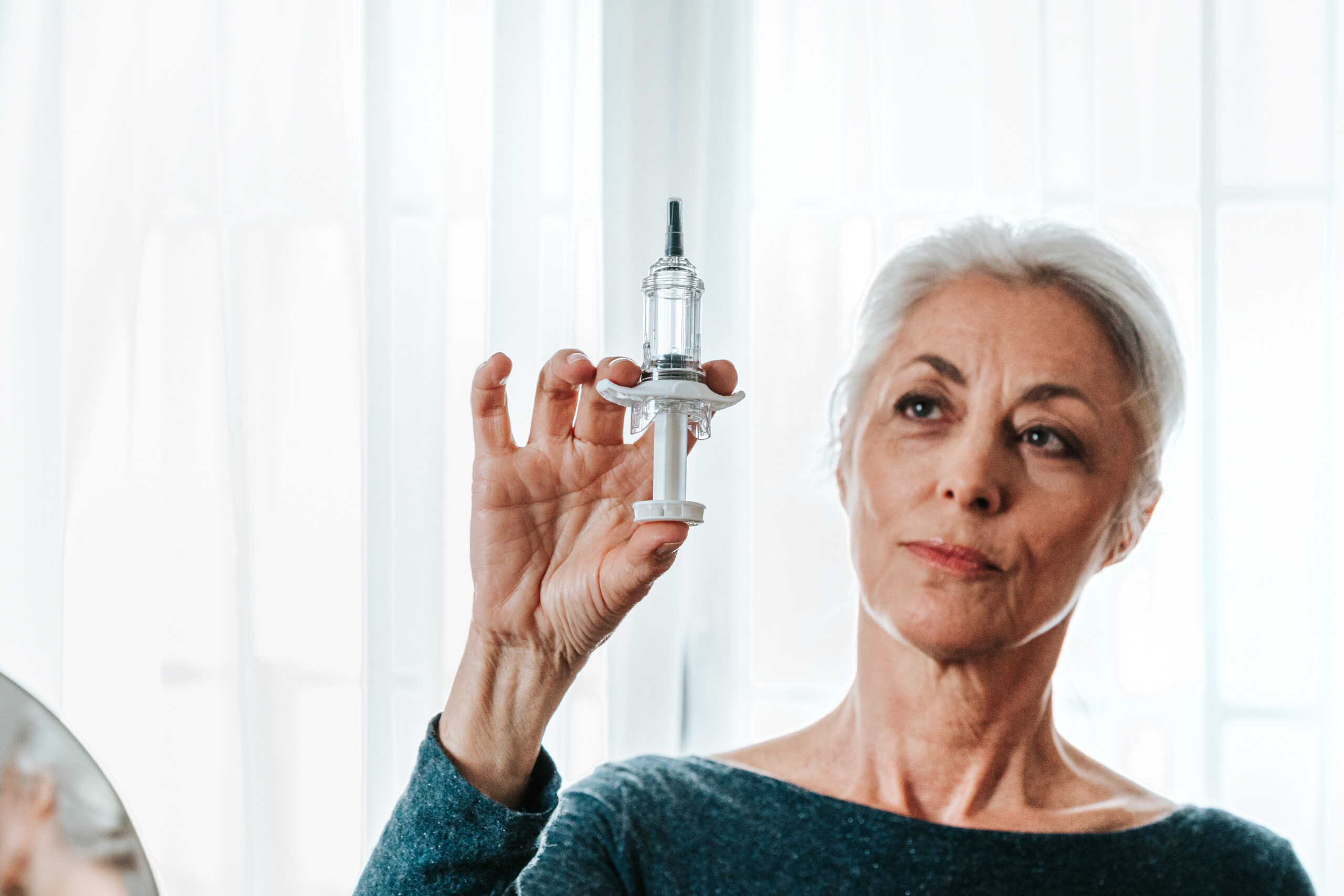
Nemera’s alternative to the use of sterile filters for multidose eye droppers for preservative-free formulations is a non-return valve system used in conjunction with a silicone membrane to process the returning air. The non-return valve ensures that no liquid can be re-introduced to the container after the drop has been dispensed, completely removing the need to filter the liquid. The intake of air into the dispenser takes place via a separate venting system with a silicone membrane called the PureFlow™. The silicone membrane is a solid, non-porous (unlike bacterial filters) material. It is homogenous and does not contain any holes, meaning that its characteristics can be precisely engineered.
To read the full article: https://www.ondrugdelivery.com/wp-content/uploads/2025/03/169_2025_Mar_Ophthalmic_Nemera.pdf