Nemera launches a reusable auto-injector at CPHI Milan
Published: 21/10/2024
A major player in the design and manufacture of drug delivery devices, Nemera today generates 44% of its sales from injectiondelivery devices, which can be produced on a contract basis for customers or through proprietary platforms designed and developed in-house. Cécile Gross, Global Category Manager Parenteral at Nemera, explains the key trends in this fast-growing market.
What is the range of parenteral drug delivery devices on offer, and what does this market represent for Nemera?
Cécile Gross: This is a major part of Nemera’s business, accounting for 44% of its revenues. Our offer is divided into two main areas. The first involves the custom production of injection devices belonging to customers who ask us to industrialise them. Our role in this case is to succeed in producing them in the quantities requested and to optimise the industrialisation process as the product’s life cycle progresses. This development on an industrial scale is generally carried out in a relatively short space of time, as Nemera’s expertise in pen injectors dates back more than 20 years, and we have acquired knowledge of most of the devices on the market. The concrete result of this type of collaboration is the availability of our production facilities in our 7 factories. Either we have production capacity in an existing building and can integrate one or more production lines for this new device, depending on the volumes required, or we need to build a new building to accommodate new capacity. For example, in early 2023, we invested in a new building at our Szczecin site in Poland, which specialises in ourown pen injectorplatforms. This new plant was built in 8 months and will produce, among other devices, for one of our customers. The second area of our injectables business concerns our proprietary products. These are platforms that we design and offer to pharmaceutical companies. They are most often adapted to the specific needs of the customer and customised so that the final product can stand out on the market.
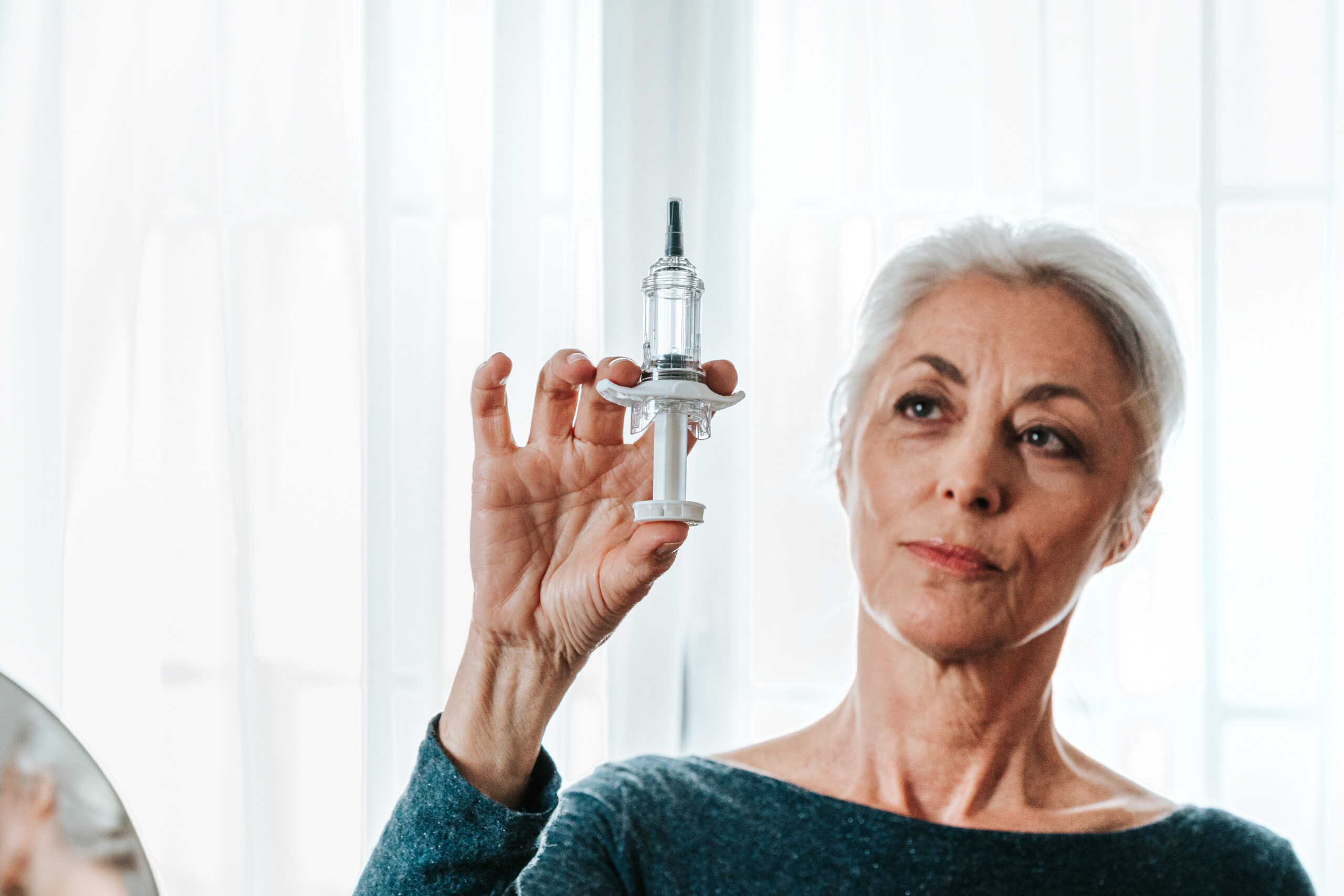
These platforms include safety systems for pre-filled syringes, pen injectors , wearables and implanters. Very soon, we will be adding a reusable auto-injector platform, which we will be presenting for the first time at CPHI Worldwide in Milan in October.
Our range is therefore comprehensive, covering all the market’s needs in terms of subcutaneous injection devices. In addition to our products, we offer a range of services, supporting our customers throughout the development of their combined product (formulation + delivery device), from formulation to market launch. This calls on a range of in-house skills:R&D – Insight by Nemera – with prototyping, comparativetestings, regulatory aspects, the development of an app for a connected device, etc., but also the whole industrialisation aspect, which concerns machines, production capacity, the whole production process and flow, right through to assembly and storage.
Which therapeutic areas are covered by your range of injection devices?
G. : A very wide range. Today, a multitude of therapeutic areas are covered by the parenteral route. Nemera’s offering is essentially aimed at the treatment of chronic diseases that patients self-administer. Internally, we distinguish between different major families. The most important is metabolic disorders, including diabetes and obesity. Next comes immunology, with all autoimmune diseases – except diabetes – such as rheumatoid arthritis, psoriatic arthritis and so on. Then there is oncology, which is currently the area with the most R&D and clinical trials underway, and the fastest-growing. Then there are all the pathologies associated with disorders of the central nervous system, such as multiple sclerosis, skin disorders such as psoriasis, bone disorders such as osteoporosis, and respiratory disorders such as asthma and COPD.
Is the launch of a reusable auto-injector platform in response to a request from your customers?
G. : The disposable auto-injector segment is currently dominated by two manufacturers who have been present in this market since the 1990s. Nemera didn’t offer any products until then. After studying this market, we decided to focus all our efforts on a reusable device in order to be in line with our sustainable development strategy and make progress in reducing our carbon footprint. Different approaches can be combined for this platform: making part of the device reusable, designing it with bio-resins and keeping the number of parts to a minimum.
What are the major trends emerging in this market as a result of your customers’ requests?
G. : The demand for ‘sustainability’ in devices is indeed one of the trends. A lot of our customers are asking us for support in this area. For this reason, Nemera has set up a partnership in order to be a credible partner and advise them in their approach to reducing their carbon footprint. But the strongest trend is in the demand for platforms for parenteral administration devices. Previously, the major pharmaceutical companies were more inclined to develop their own administration systems. Now we are seeing the opposite, particularly from generic manufacturers and biotechs. They do not have R&D departments large enough to design their own systems. What’s more, by using a manufacturer like Nemera, they can speed up their time-to-market, benefit from economies of scale and have a consistent range if they offer different molecules. This demand for injection platforms also corresponds to a need for injection volumes greater than those currently available. In fact, the current transfer of treatments administered intravenously to the subcutaneous route requires reformulation, most often involving an increase in the volume of the dose to be injected. Treatments for rare diseases based on biological products are also often characterised by injection volumes that far exceed those previously available. The maximum dose injected via a pre-filled syringe used to be limited to 2.25 ml. Today, some auto-injectors claim todeliver up to 5 ml in a single injection. In response to this trend, we have also developed our Symbioze® wearable device platform, which can deliver up to 20 ml in a single injection.
What impact might this trend towards larger injection volumes have on the design of your devices?
G. : As a manufacturer of injection devices, our responsibility is to deliver the right dose. So it is particularly important that we address these new needs. Compared with formulations requiring a larger injection volume and often greater viscosity, these are more sensitive. To inject a drug, we have to push the drug to inject it underthe skin. These new constraints mean we have to adapt our devices and check that our pusher systems deliver the right dose, but without damaging the formulation, which would compromise the clinical study orclinical outcomes . Depending on the volume to be injected, the thrust force of an injecting devicecan be increased so that a larger volume can be injected in a single injection and fairly quickly. In the case of a wearable device, the injection time can be increased. But our challenge is to ensure that this injection time is acceptable to the patient. If it turns out to be painful and too long, there is a good chance that the patient will stop the treatment prematurely. So there are purely mechanical technical impacts involved in injecting the drug without damaging it, but there are also impacts in terms of the patient’s experience. This is where Insight by Nemera’s skills come into play. For example, for our Symbioze® platform, we carried out a HF study with patients to observe how they experienced different everyday situations when wearing it – bending down, filling the fridge, vacuuming, etc. – in order to avoid any uncomfortable situations.
Is the demand for connectivity also a trend?
G. : Itis nothing new, but I would say that this trend has taken a back seat to sustainability. We do all this in-house, with dedicated teams in Lyon and Chicago who are well versed in the art of developing user interfaces, apps and so on. We also design the electronics in-house, but do not produce the printed circuits.
What developments do you foresee in this market for injection devices in the more or less short term?
G. : Over the last few years, wehave witnessed a more complex market and a diversification of presentations of the same molecule for the treatment of the same disease. Previously, for example, we mainly supplied safety systems for pre-filled syringes for biological drugs. Today, it is not unusual for us also to supply an auto-injector platform and a wearable platform for the same drug. This diversification of presentations can be explained from an economic point of view: pharmaceutical companies will prefer the least expensive device for developing markets. In countries with more developed healthcare systems, the choice of device may be left to the patient, to ensure adherence as much as possible to their treatment. Finally, we are also seeing a diversification in the routes of administration for the same treatment. For example, until now, asthma was treated exclusively via the pulmonary route, using inhalation devices. Today, injectable drugs are available. This may also be the case for severaltreatments that were only available via the nasal route, for which parenteral drugs are beingformulated.